The Best Fluffy Pancakes recipe you will fall in love with. Full of tips and tricks to help you make the best pancakes.

Composite door repair is often overlooked because composite doors have a reputation for being tough and low maintenance. They are, but they are not immune to wear. Locks fail, hinges drop, seals flatten and the outer skin can be scratched or cracked. A composite front door is also one of the more expensive doors to replace, so knowing what can be repaired saves real money.
This guide explains how composite doors are built, the problems they develop, which repairs are possible and what they typically cost. It also covers security upgrades and when replacement genuinely makes sense.
Quick answer
Most composite door problems are repairable. Typical repair costs include around £50–£200 for a faulty lock mechanism, £70–£190 for dropped hinges, £75–£175 for worn weather seals and £60–£150 for minor cracks. A new composite front door usually costs £850–£3,000 installed.
How a composite door is made
A composite door is built in layers. Typically there is a tough outer skin, often glass-reinforced plastic (GRP), over a core of insulating foam or engineered timber, held in a reinforced frame. The skin is moulded to look like painted timber, and the door is fitted with a multipoint lock similar to a uPVC door.
That layered construction gives good insulation and strength. It also means some faults, such as deep damage to the skin or a failed core, need specialist attention. But the parts that wear most, such as the lock, hinges and seals, are standard and replaceable.
Common composite door problems and repair costs
| Problem | Typical repair | Typical cost |
|---|---|---|
| Lock stiff, not engaging or broken | Adjust, or replace mechanism or cylinder | £50–£200 |
| Door dropped, scraping or catching | Hinge adjustment or replacement | £70–£190 |
| Draughts or water ingress | New weather seals | £75–£175 |
| Blocked threshold drainage | Clear and repair drainage | £65–£180 |
| Minor cracks or chips in the skin | Filler and colour-matched touch-up | £60–£150 |
| Warping or bowing | Specialist assessment and correction | £120–£280 |
Costs from the Checkatrade composite front door repair guide, including labour and materials. Actual quotes depend on the door system and parts.
Lock problems
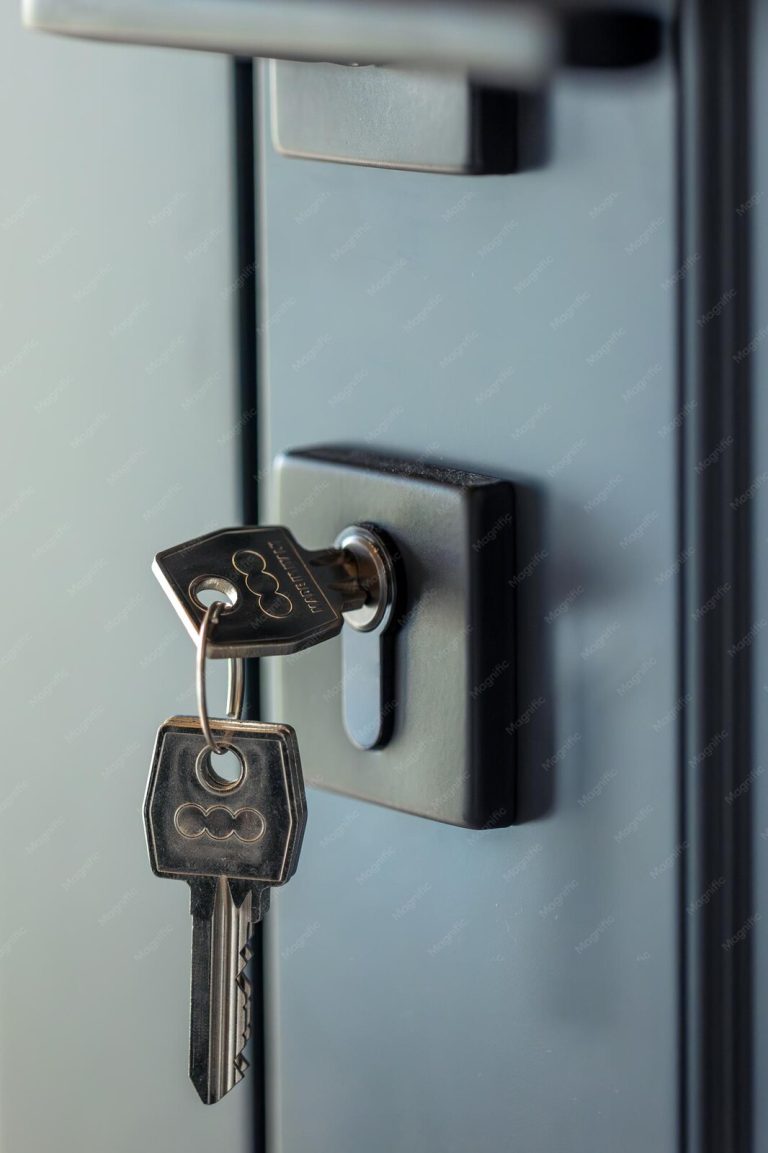
Composite doors use multipoint locks, with hooks, rollers or bolts engaging keeps along the frame. As with uPVC doors, most locking problems come from misalignment rather than a broken mechanism. If the handle needs forcing to lift, the door has probably dropped or the keeps need adjusting. If the handle is loose and floppy, the gearbox may have failed.
Our guide to doors that won’t lock applies equally to composite doors and includes a diagnosis table.
Dropped doors and hinges
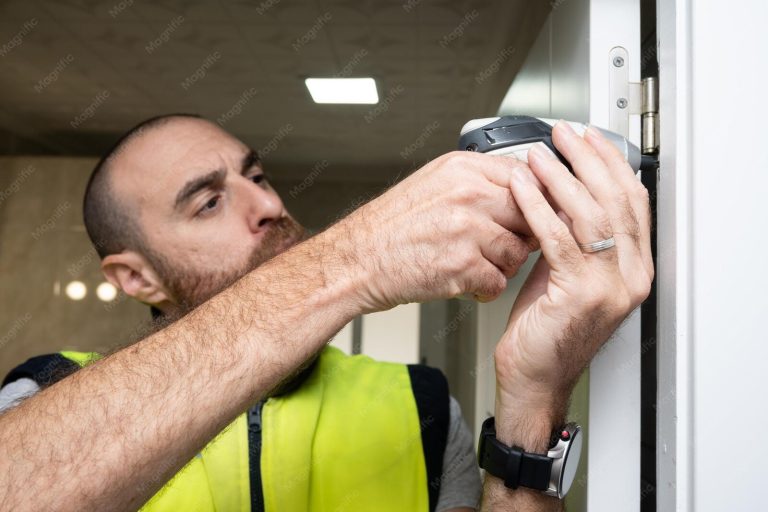
Composite doors are heavy, so hinge adjustment is a common repair. Signs include scraping on the threshold, a gap at the top lock-side corner and a handle that is harder to lift. Many composite doors use adjustable flag hinges that can be corrected with an Allen key. Our door adjustment guide explains the process step by step.
Seals, draughts and water
The weather seals around a composite door compress every time it closes. Over years they flatten, shrink or tear, letting in draughts and sometimes water. Replacement seals restore the fit. At the bottom, the threshold has drainage channels that must stay clear, otherwise rainwater can collect and find its way inside.
Cracks, scratches and chips
The GRP skin is tough, but it can be scratched by keys, rings and bicycles, or chipped by impacts. Small damage can usually be filled and touched up with colour-matched products. Larger cracks should be assessed, because water getting into the core can cause bigger problems over time.
Warping and bowing
Dark composite doors in strong sun can heat up considerably. Doors with lower quality cores, or doors that have been badly installed, may bow slightly. Mild cases can sometimes be corrected by adjusting hinges and keeps, or by a specialist. Severe, permanent bowing is one of the few situations where replacement is the sensible answer.
Security upgrades during a composite door repair
If your door needs lock work, it is a good time to check its security:
- Fit an anti-snap cylinder rated TS007 3-star or Sold Secure SS312 Diamond, the standards the Master Locksmiths Association identifies for anti-snap protection.
- Make sure the cylinder sits flush with the handle rather than sticking out.
- Check the letterplate for a cowl or guard if the door has one.
- Confirm every locking point engages when you lift the handle.
Repair or replace your composite door?
Repair when
- The problem is locks, hinges, seals or alignment
- Damage to the skin is minor
- The door and frame are structurally sound
- Problems are seasonal expansion
Consider replacement when
- The door is severely warped or cracked
- The core has failed or absorbed water
- The frame is damaged beyond repair
- Security features cannot be restored
For a wider look at the decision, see should I replace my windows?, which applies the same principles to doors.
Looking after a composite door
- Wash it with mild soapy water a few times a year. Avoid abrasive cleaners.
- Lubricate the hinges and locking points twice a year.
- Lift the handle fully every time you lock it, so all points engage.
- Clear the threshold drainage in autumn.
- Act early if the door starts to stick or needs extra force.
Who to call for composite door repair
For locks, hinges, seals and alignment, a door repair specialist or a locksmith who works on multipoint doors is usually the right choice. For damage to the skin, ask whether the repairer has colour-matched repair products for your door’s finish, or contact the door’s manufacturer, as some offer repair kits or touch-up paint. For severe warping, ask the original installer first, particularly if the door may still be under guarantee. Our guide on choosing a window repair specialist explains how to check a repairer.
What to watch out for
- A new door recommended for a dropped hinge or a sticking lock.
- Generic cylinders fitted without checking the length, leaving the cylinder sticking out beyond the handle.
- Unmatched filler on a coloured skin, which can look worse than a small scratch.
- Ignored guarantees. Composite doors often carry long guarantees, so check before paying.
Composite door repair checklist
- Check the gaps around the closed door for signs of dropping.
- Lock and unlock slowly, noting where you feel resistance.
- Look at the seals for flattening, tears or gaps.
- Inspect the skin for cracks, especially around the letterplate and glazing.
- Find your guarantee before booking any work.
Seasonal care for composite doors
Composite doors are low maintenance, but they still benefit from attention. In spring, wash the door and lubricate the hinges and locking points. In summer, watch for sticking on hot afternoons, particularly with dark doors in full sun. In autumn, clear the threshold drainage and check the seals before winter weather arrives. In winter, never force a stiff lock; warm the key slightly or use a lock lubricant instead. Our maintenance checklist covers doors as well as windows.
Composite door repair in older homes
Composite doors are often fitted to older houses where the opening is not perfectly square. If a door has been fitted into a frame that has moved, adjustments may need repeating more often. A good repairer will check the frame fixings as well as the door, and tell you if the issue lies in the opening rather than the door itself.
Keep reading
Frequently asked questions
Can a composite door be repaired?
Yes. Locks, hinges, seals and minor skin damage are all commonly repaired. Only severe warping or core damage usually justifies replacement.
Why is my composite door hard to lock in summer?
Heat makes the door expand, especially if it is dark and sun-facing. A small keep or hinge adjustment usually solves it.
Can scratches on a composite door be fixed?
Most surface scratches and small chips can be filled and touched up with colour-matched repair products.
How long does a composite door last?
A good composite door can last many years. Its locks, hinges and seals may need replacing during that time.
Featured image by rawpixel.com on Magnific (free licence).