The Best Fluffy Pancakes recipe you will fall in love with. Full of tips and tricks to help you make the best pancakes.

uPVC window hinge replacement is one of the quickest and cheapest ways to bring a tired window back to life. Yet a window that drops, rubs on the frame or swings shut in the wind is often blamed on “old windows” and used as a reason to sell a whole new set. In reality, the hinges are a wearing part. They are designed to be replaced, and doing so takes well under an hour per window.
This guide explains how uPVC window hinges work, the signs that they are failing, the different types you may have, and what replacement costs in 2026. It also covers the cases where a simple adjustment is enough and new hinges are not needed at all.
Quick answer
If your window drops, catches the frame, will not stay open or has become hard to lock, worn friction hinges are the usual cause. Replacement parts cost roughly £18–£37 per pair, and a professional uPVC window hinge replacement typically costs £67–£145 per window including fitting.
How uPVC window hinges work
Most uPVC casement windows do not use a simple butt hinge like a door. Instead they use friction stays, sometimes called friction hinges. These are a pair of metal arms fitted top and bottom on a side-opening window, or on each side of a top-opening one. As the window opens, the arms slide along a track and pivot, moving the sash outwards and away from the frame.
A friction pad inside the slider provides just enough resistance to hold the window in position. That is why a healthy window stays where you leave it, even in a breeze. Over time the pad wears, the rivets loosen and the arms can bend, and the window starts to misbehave.
Signs your hinges need attention
- The sash has dropped. On a side-hung window, the far corner catches the frame as it closes.
- It will not stay open. The window swings shut or blows open with little force.
- It is stiff or grinding. You hear crunching or feel the window snag part-way.
- It is hard to lock. The handle needs forcing because the locking points no longer line up with the keeps.
- There is a gap. Light or draughts show along one edge when the window is shut.
- Visible damage. Bent arms, rust or loose rivets on the hinge itself.
Several of these symptoms overlap with other faults. A window that is hard to lock may also have a worn gearbox, and a draught could be a tired gasket. Our guides to uPVC window handle replacement and fixing draughty windows cover those causes.
Adjust, lubricate or replace?
Not every misbehaving hinge needs replacing. A quick check helps you decide.
- Clean the track. Dirt and grit in the slider track cause stiffness. Wipe it out with a damp cloth.
- Lubricate lightly. A silicone spray or light machine oil on the moving parts helps. Avoid heavy grease, which collects dirt.
- Check for an adjustment screw. Some friction stays have a small screw on the slider that increases or reduces friction.
- Look at the arms. If they are bent, rusted or have loose rivets, adjustment will not fix them. That is when replacement is needed.
- Test the lock. If the window still drops or will not lock smoothly after cleaning and adjustment, the hinges have worn beyond their useful life.
Types of uPVC window hinge
Getting the right replacement matters. A hinge that is the wrong length or stack height will not support the sash properly, and the window will drop again quickly.
| Hinge type | What it does | Where you find it |
|---|---|---|
| Standard friction stay | Holds the sash open by friction | Most side-hung and top-hung casements |
| Egress (fire escape) hinge | Opens to around 90 degrees to leave a clear escape opening | Bedrooms and rooms where a window may be an escape route |
| Easy-clean hinge | Slides the sash across so you can clean the outside from indoors | Upper floor side-hung windows |
| Restrictor hinge | Limits the opening for child safety, with a release | Upper floors and family homes |
| Heavy-duty hinge | Higher load rating for large or heavy sashes | Big casements and triple glazed sashes |
Two measurements identify most friction stays: the length of the hinge track, and its stack height, which is the thickness of the hinge between the frame and the sash. Stack heights of 13mm and 17mm are the most common. A glazier will match both, along with the hinge type.
Keep escape windows as escape windows. If a window currently has egress hinges, replace them with egress hinges. Swapping to standard hinges can reduce the clear opening of a window that is meant to be a route out in a fire. The government’s Approved Document B sets out the guidance on means of escape.
How much does uPVC window hinge replacement cost?
Hinges themselves are inexpensive. Most of the cost is the visit and the labour, which is why replacing hinges on several windows at once brings the price per window down.
| Item | Typical cost |
|---|---|
| Friction hinges, parts only (per pair) | £18–£37 |
| Standard friction hinges, supplied and fitted (per window) | £67–£145 |
| Typical labour rate | £25–£40 per hour plus call-out |
| New uPVC window, installed, for comparison | £350–£600+ |
Figures from Checkatrade and London repair specialist price guides, rounded. Egress, easy-clean and heavy-duty hinges cost a little more than standard ones.
What happens during a uPVC window hinge replacement
- Identify the hinge. The glazier measures the length and stack height and notes the type.
- Support the sash. The opening part of the window is supported, because once the hinges are released it is held only by hand. Large sashes need two people.
- Remove the old hinges. Screws are taken out of the sash and the frame, and the sash is lifted away.
- Fit the new hinges. The new stays are screwed to the frame, the sash is offered back and fixed.
- Adjust and test. The window is opened, closed and locked several times. Keeps may be adjusted so the locking points engage cleanly.
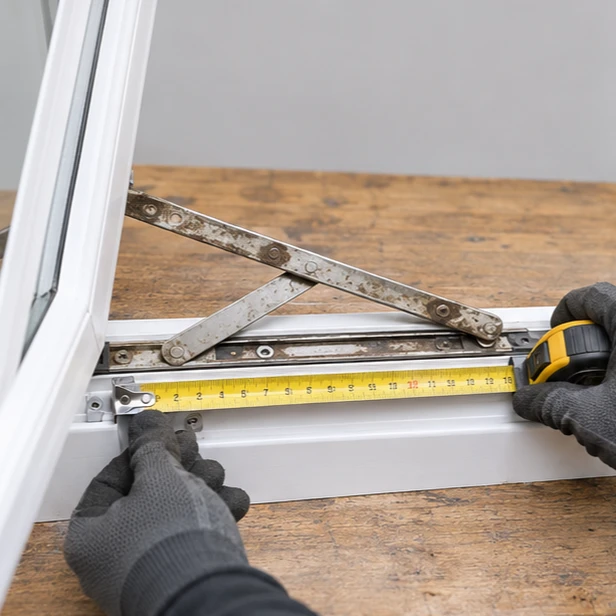 1
Measure the old hinge
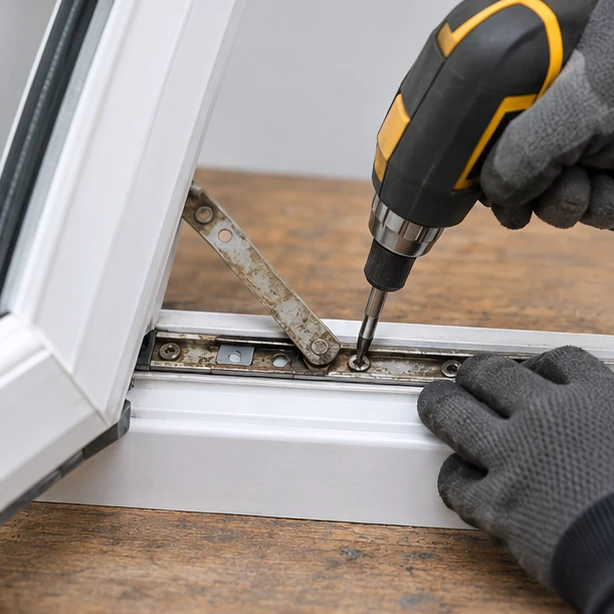 2
Unscrew the worn hinge
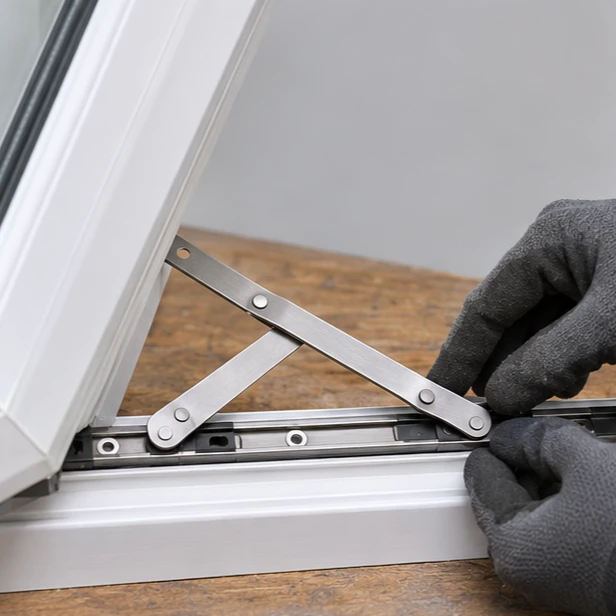 3
Fit the new friction hinge
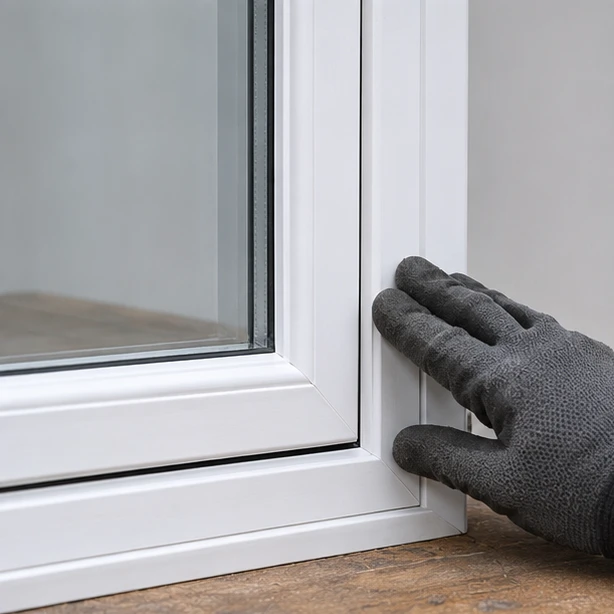 4
Close and check the gaps
The whole process usually takes 30 to 60 minutes for a standard window. Nothing is cut, the glass stays in place and there is no mess to clear up.
Why hinges wear out early
Some windows chew through hinges faster than others. Knowing why helps you choose the right replacement.
- Heavy glass. Large sashes, thicker sealed units and especially triple glazing put more load on the stays. A heavy-duty hinge may be the better choice.
- Wind. Windows left open on blustery days get slammed against their stops, which bends the arms.
- Wrong size first time. A hinge that is too short for the sash height carries more load than it was designed for.
- Corrosion. Cheaper zinc-plated hinges can rust. Stainless steel lasts longer.
- No maintenance. A wipe and a light oil once a year makes a real difference. Our maintenance checklist includes it.
Can I replace uPVC window hinges myself?
On a small ground floor window, a confident DIYer can do it. The difficult parts are identifying the exact hinge, supporting the sash safely and getting the alignment right so that the window locks smoothly afterwards.
On upper floors the picture changes. The sash has to be held while the hinges are off, and dropping a glazed sash from height is dangerous. For those windows, and for any egress or restrictor hinges, a professional is the sensible choice.
When new hinges are not enough
Very occasionally, a window keeps dropping even with new hinges. That usually means the glass unit inside the sash has slipped off its packers, or the frame has been damaged. A good repairer will check the glazing packers while the sash is accessible. If the frame itself is distorted, it is worth reading our guide to deciding whether to replace a window.
For the price of other common repairs, see our 2026 repair cost guide.
Who to call for uPVC window hinge replacement
For a standard friction hinge, a uPVC window and door repair specialist is the right person. Many carry the common lengths and stack heights and can fit them on the first visit. For egress, restrictor or heavy-duty hinges, send a photo first so the correct part is brought along. Glaziers who mainly fit new windows may not stock hinges at all. See our guide on choosing a window repair specialist.
What to watch out for
- Being told the whole window must go because it has dropped. A dropped sash is a classic hinge or glazing packer fault.
- Standard hinges fitted to an escape window. Escape windows should keep egress hinges.
- The wrong size. A hinge that is too short for the sash will wear out quickly.
- No check of the glazing packers. If the glass has slipped, new hinges alone may not stop the sash dropping again.
How to make new hinges last longer
New friction hinges can last many years if they are looked after. Wipe the slider track clean and apply a light oil or silicone spray once or twice a year. Do not leave windows wide open on windy days, because gusts slam the sash against its stops and bend the arms. On large or heavy sashes, ask for heavy-duty hinges with the right load rating. Our uPVC maintenance checklist includes hinge care in its seasonal routine.
Keep reading
Frequently asked questions
How long do uPVC window hinges last?
It varies with use, size and quality. Heavy sashes and windows that are often left open in the wind wear their hinges faster. Annual cleaning and light lubrication extend their life.
Why does my window catch at the bottom when it closes?
On a side-hung window, this is the classic sign of a dropped sash. Worn friction hinges let the far corner sag. New hinges, and sometimes repacking the glass, usually fix it.
Are uPVC window hinges universal?
No. They vary in length, stack height, type and fixing positions. Measuring the existing hinge carefully is essential.
Do I need building regulations approval to replace hinges?
No. Replacing hinges is a repair. Just make sure escape windows keep egress hinges so the opening still works as a means of escape.
Featured image by gpointstudio on Magnific (free licence).