The Best Fluffy Pancakes recipe you will fall in love with. Full of tips and tricks to help you make the best pancakes.

Draughty windows are one of the most common reasons people decide their double glazing has “had it”. A cold stream of air around a closed window feels like proof that the whole thing is failing. Yet in most uPVC windows, a draught comes from a small number of adjustable or replaceable parts: the locking cams, the keeps, the rubber gaskets or the hinges. Fixing them is usually quick, cheap and far less disruptive than new windows.
This guide shows you how to find exactly where the draught is coming from, which fixes you can try yourself, what a professional repair involves and roughly what it costs. It also explains the difference between a draught and the deliberate ventilation your windows are designed to provide.
Quick answer
Most draughty windows are caused by loose locking compression, worn or shrunken gaskets, a dropped sash or failed sealant around the outside of the frame. Many can be fixed by adjusting the locking cams or keeps. Replacing gaskets or resealing a window typically costs £80–£125 per window, and simple draught repairs can cost less.
Draught or ventilation? Know the difference first
Modern windows are not meant to be completely airtight. Many have trickle vents, small slotted vents in the top of the frame, which let a controlled amount of fresh air into the room. Some handles also have a night-vent position, where the window is locked but held slightly open.
That background ventilation is important. It removes moisture from cooking, washing and breathing, which helps prevent condensation and mould. Ventilation in homes is covered by Approved Document F of the Building Regulations. So before you tape up every gap, check that what you are feeling is not simply an open trickle vent.
Do not seal trickle vents permanently. Closing them in very cold, windy weather is fine, but blocking them for good can lead to condensation, damp and mould. If a vent whistles or lets in too much air, a repairer can fit a new vent cover or a different style of vent.
How to find where a draught is coming from
A draught can come from the opening edge of the window, the hinge side, the glass, or the joint between the frame and the wall. Each has a different fix, so it is worth being precise.
- Choose a windy day. Draughts are much easier to find when there is pressure on the outside of the window.
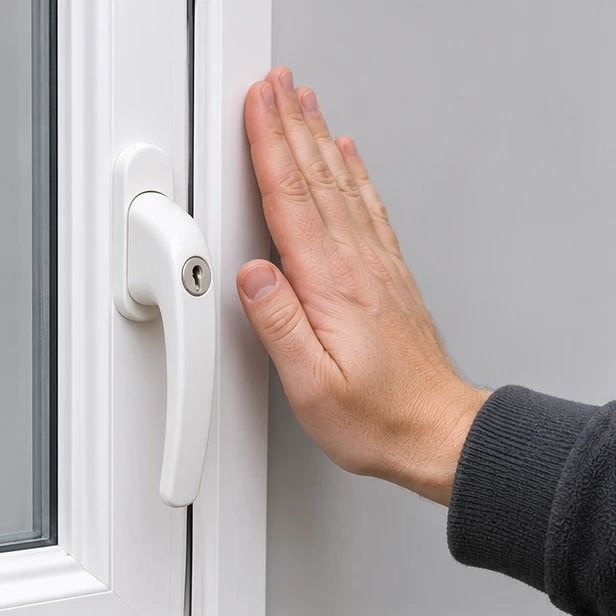
- Use the back of your hand. Run it slowly around the edges of the closed window. Skin is surprisingly sensitive to small air movements.
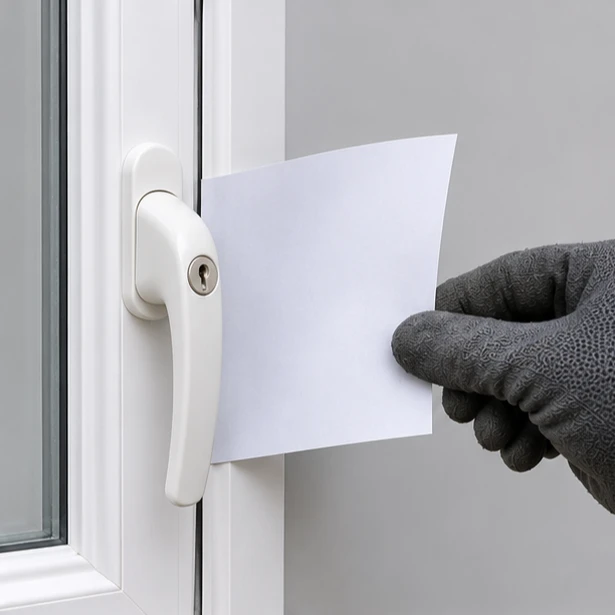
- Try the paper test. Close the window on a strip of paper at several points around the opening edge. If the paper slides out easily, compression is weak at that point.
- Check the frame-to-wall joint. Feel around the outside edge of the frame inside the room, then look at the sealant outside. Cracked or missing silicone lets air in behind the frame.
- Look at the gaskets. Open the window and inspect the rubber seals. Gaps at the corners, shrinking, flattening or cracking all point to worn gaskets.
 1
Feel along the edges for moving air
 2
Try the paper test
 3
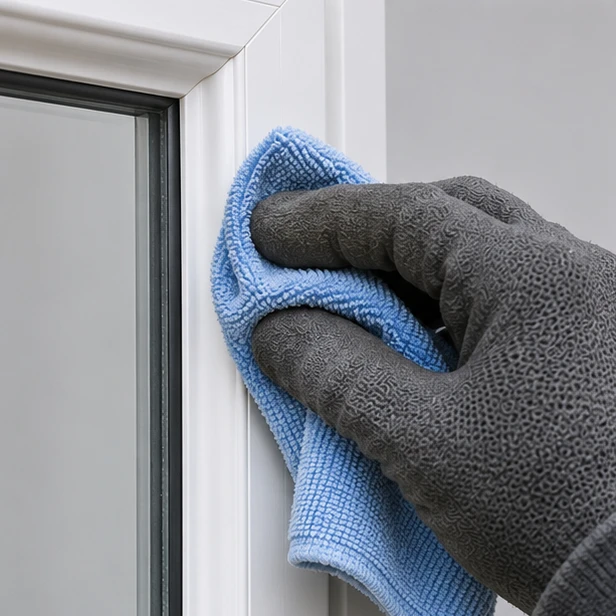
Clean the rubber gaskets
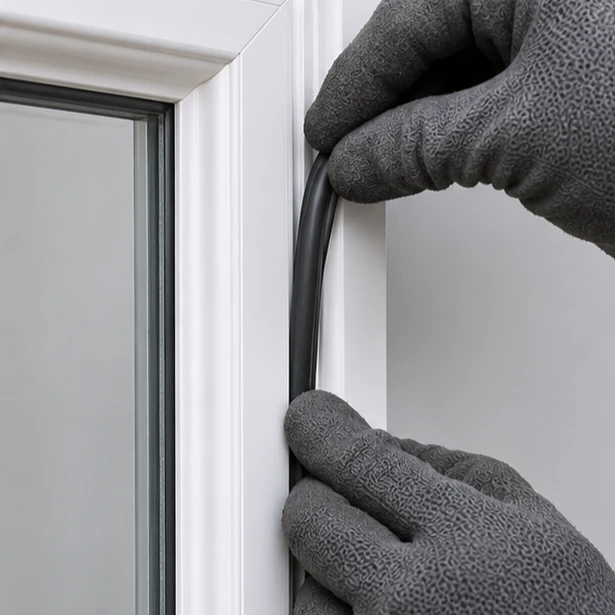 4
Replace a gasket that has flattened
The main causes of draughty windows, and how to fix each one
1. Weak locking compression
Most uPVC windows lock using small round or oval cams on the edge of the sash. When you turn the handle, these cams slide behind keeps on the frame and pull the window tight against its seals. Many cams are eccentric, which means they can be turned with an Allen key or a small spanner to increase or reduce compression.
Turning the cams so the window is pulled in more tightly often cures a draught in minutes. Make small adjustments, and adjust every cam on the same side by the same amount. Too much compression makes the handle stiff and wears the gearbox, so aim for firm rather than forced.
2. Worn or shrunken gaskets
The rubber gaskets around the sash and frame are what actually seal the window. Over many years they harden, shrink away from the corners or flatten. Once they lose their spring, no amount of locking pressure will make the window airtight. Most gaskets can be pulled out and replaced with a new length of the correct profile.
3. A dropped sash or worn hinges
If the window has dropped on its hinges, it no longer sits evenly against the seals. You may feel a draught along the top on one side and see the sash rubbing at the bottom. New friction hinges, sometimes with the glass repacked, put it back in line. Our uPVC window hinge replacement guide explains this fix.
4. Failed sealant around the frame
The joint between the window frame and the wall is usually sealed with silicone on the outside. Sunlight and movement eventually crack it. When that happens, air and sometimes rain can get in behind the frame. Cutting out the old sealant and applying a new bead is a routine repair.
5. Misaligned keeps
If keeps have worked loose or been knocked, the cams may not engage fully. Re-fixing or adjusting the keeps restores even compression all the way round.
6. Gaps around sash windows
Traditional timber sliding sash windows are draughty by design unless they have been draught-proofed. Fitting brush-pile seals into the sash and frame can cut draughts dramatically without changing the look of the window. See our guide to sash window repair.
How much does it cost to fix draughty windows?
Because most fixes are adjustments or simple part replacements, costs are modest compared with new windows.
| Draught repair | Typical cost |
|---|---|
| Draught or air leak repair (adjustment) | £30–£100 |
| Window reseal or gasket replacement, per window | £80–£125 |
| New friction hinges, per window | £67–£145 |
| Sash window draught-proofing, per window | £248–£388 |
| New uPVC window, installed, for comparison | £350–£600+ |
Ranges from 2026 MyBuilder, MyJobQuote and Checkatrade price guides, rounded.
Fixes you can safely try yourself
- Clean the seals. Dirt on gaskets stops them sealing. Wipe them with warm soapy water and dry them.
- Adjust the cams. If your window has adjustable cams, small turns can restore compression.
- Lubricate moving parts. A light silicone spray on the locking mechanism makes the window easier to close fully.
- Close trickle vents temporarily on very cold, windy nights, then reopen them.
- Use heavy curtains or thermal blinds. They reduce heat loss through the glass and soften draughts from frames.
Avoid stuffing gaps with foam tape on uPVC windows. It can stop the window locking properly, and it treats the symptom rather than the cause.
Draughty windows and energy bills
Draughts make a room feel colder than the thermostat says, so people turn the heating up. The Energy Saving Trust consistently lists draught-proofing among the most cost-effective energy improvements a home can make, because it is cheap and quick compared with bigger upgrades. You can read their advice on windows and doors.
It is also worth keeping draughts in perspective. If your windows are already double glazed and the glass units are sound, fixing the draughts usually delivers most of the comfort improvement you would get from new windows, at a tiny fraction of the cost. Our article on whether new windows really save money runs through the numbers.
When draughts point to a bigger problem
Occasionally a draught reveals something that adjustment cannot fix:
- A warped or cracked frame that no longer meets the sash evenly.
- Rotten timber around a wooden window, especially at the bottom rail and sill.
- Movement in the wall around the frame, shown by cracks in plaster or render.
Those cases need a closer look. Even then, rotten sections of timber windows can often be repaired. If you are unsure whether a window is worth saving, read should I replace my windows?
A winter checklist for draughty windows
- Early autumn: clean gaskets and lubricate locks and hinges on every window.
- First windy day: walk round with the back of your hand and note any draughts.
- Check outside: look for cracked sealant around frames.
- Book one visit for any adjustments, gaskets or hinges, so the call-out covers everything.
- Keep ventilation working: leave trickle vents open and use extractor fans when cooking and showering.
For a year-round routine, see our uPVC window maintenance checklist.
Who to call about draughty windows
A uPVC window and door repair specialist can usually fix draughty windows in one visit: adjusting locking cams and keeps, fitting new gaskets, replacing worn hinges and resealing frames. For timber sash windows, look for a specialist who fits brush-pile draught-proofing. If the draught comes from cracks around the frame in the wall itself, a builder may be needed as well. Our guide on choosing a window repair specialist explains what to ask.
What to watch out for
Draughty windows are a favourite opening line in replacement sales pitches, and the fix is often far simpler than new frames. Be cautious if nobody checks the locking compression or the gaskets before recommending replacement. Avoid anyone who suggests sealing trickle vents permanently, as that can trade a draught for condensation and mould. Ask what is causing the draught at each window and what the specific fix is.
How to stop the draughts coming back
- Clean gaskets with mild soapy water each spring and autumn so they stay supple.
- Lubricate the locking cams so windows close fully without force.
- Check the cams each autumn and adjust them slightly if compression has loosened.
- Inspect the outside sealant and replace any cracked sections.
- Keep ventilation working with open trickle vents and extractor fans.
Keep reading
Frequently asked questions
Why are my new windows draughty?
New windows can be draughty if the locking cams are set too loose, if the frame was not packed and sealed correctly, or if trickle vents are open. The installer should adjust them under guarantee.
Can I replace window gaskets myself?
Yes, on many windows. The key is matching the exact gasket profile. Taking a short piece of the old gasket to a supplier helps.
Do trickle vents cause draughts?
They let in a small, controlled amount of air by design. If a vent is broken or very draughty, it can be replaced, but it should not be sealed up permanently.
How do I stop draughts from sash windows?
Professional draught-proofing with brush-pile seals is the most effective option and keeps the original window.
Featured image by tonodiaz on Magnific (free licence).