The Best Fluffy Pancakes recipe you will fall in love with. Full of tips and tricks to help you make the best pancakes.

When a uPVC door won’t lock, the first instinct is often to assume the lock is broken and the door needs replacing. In practice, most uPVC doors that refuse to lock are simply out of alignment. The locking hooks and rollers on the edge of the door no longer meet the keeps in the frame, so the handle will not lift or the key will not turn. That is usually an adjustment, not a new door.
This guide explains how a uPVC door locks, the most common reasons it stops locking, the checks you can safely do yourself, and what professional repairs cost in 2026. It also covers when it is worth upgrading the cylinder for better security while the door is being fixed.
Quick answer
A uPVC door that won’t lock is most often caused by the door dropping or the frame moving, so the locking points no longer line up with the keeps. Hinge or keep adjustment fixes many cases. Where parts have failed, a euro cylinder typically costs £75–£140 fitted and a full multipoint mechanism £150–£350, far less than a new door.
How a uPVC door actually locks
Almost every uPVC front and back door uses a multipoint lock. Behind the faceplate on the opening edge of the door is a long steel strip, sometimes called the lock case or mechanism. It carries several locking points, such as hooks, rollers, deadbolts or shoot bolts, spread from top to bottom.
When you lift the handle, a gearbox in the centre of the strip drives all those points into matching keeps on the frame. Turning the key in the euro cylinder then locks the gearbox so the handle cannot be pushed down from outside. Because all of these parts must line up at once, even a few millimetres of movement can stop the door locking.
3–5+Locking points on a typical multipoint door
£75–£140Euro cylinder, supplied and fitted
£150–£350Full multipoint mechanism, fitted
Why your uPVC door won’t lock: the common causes
1. The door has dropped
This is the most common cause by far. Heavy doors, especially with large glass panels, slowly sag on their hinges. The hooks and rollers end up lower than the keeps, so the handle meets resistance when you try to lift it. You may also notice the door scraping the threshold or a gap at the top corner. Our guide to adjusting a dropped uPVC door explains the fix in detail.
2. Seasonal movement
uPVC expands in warm weather and contracts in the cold. A door that locks easily in winter may become tight in a hot summer afternoon, particularly if it faces south. Small adjustments to the keeps usually cure this.
3. Worn or misaligned keeps
The keeps on the frame take the full force of the locking points every time the door is closed. Screws loosen and the keeps shift. Many keeps are adjustable, so they can be moved in or out to restore smooth locking and a good seal.
4. A failed gearbox
If the handle feels loose, floppy or lifts without engaging anything, the gearbox inside the mechanism has probably failed. On many doors the gearbox can be replaced on its own; on others, the whole strip is changed.
5. A faulty or worn cylinder
If the handle lifts normally but the key will not turn, the euro cylinder may be worn or the cam inside it may be catching. Cylinders are quick and inexpensive to replace.
6. Swollen or distorted door
Less common with uPVC than with timber, but a door that has been forced, slammed repeatedly or exposed to high heat can bow. Bowing usually needs specialist assessment.
Safe checks you can do yourself
Before calling anyone, a few minutes of checking can tell you a lot. Do not force the handle or key. Forcing a misaligned door is the quickest way to break the gearbox.
- Test with the door open. Lift the handle and turn the key while the door is open. If everything moves freely, the mechanism is working and the problem is alignment.
- Look at the gap. With the door closed, check the gap around the edges. A wider gap at the top of the lock side and a tight gap at the bottom suggests a dropped door.
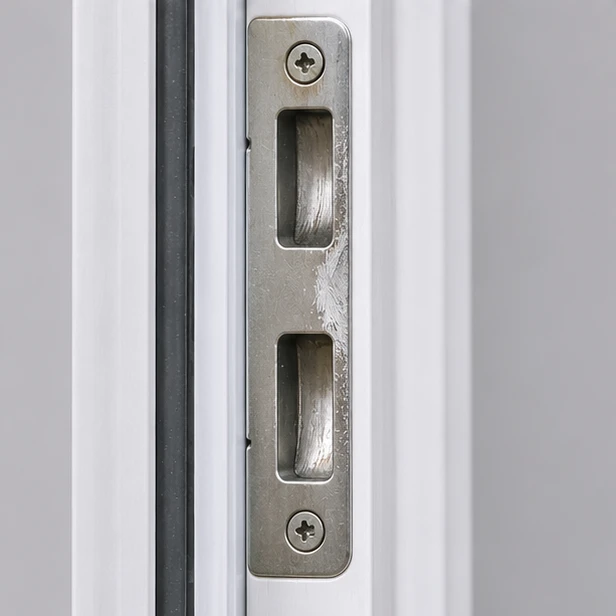
- Find the rub marks. Shiny wear marks on the keeps or the faceplate show where hooks are catching.
- Push the door while locking. If it locks when you push it firmly shut, the keeps may need moving in slightly or the seals may be compressed unevenly.
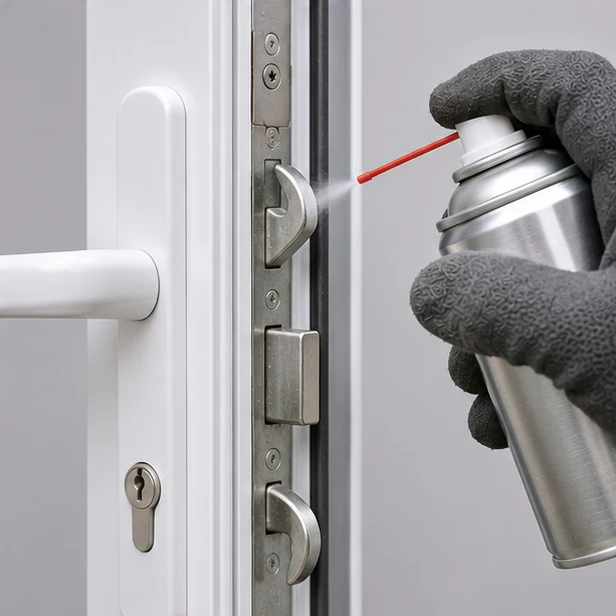
- Lubricate. A light spray of silicone or lock lubricant on the hooks, rollers and keeps can ease stiff operation. Avoid heavy grease.
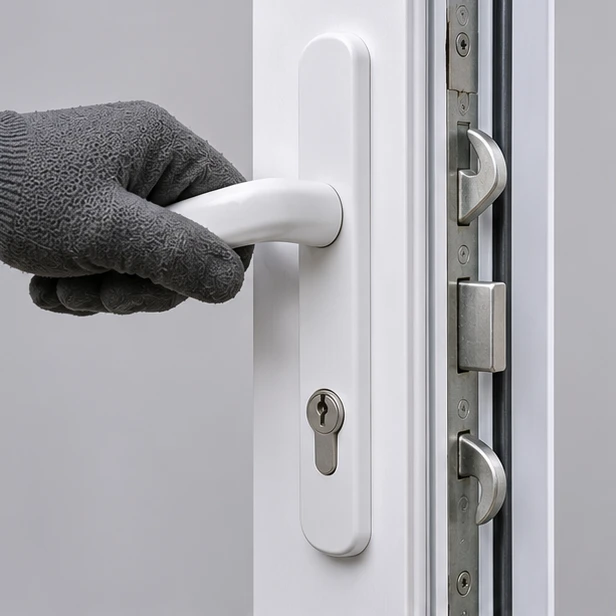 1
Test the lock with the door open
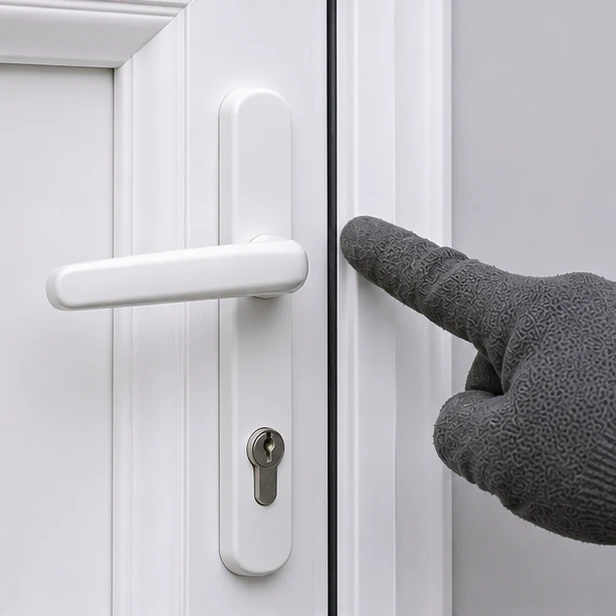 2
Check the gap on the lock side
 3
Look for rub marks on the keeps
 4
Lubricate the hooks and bolts
Locked out or locked in? If the door is stuck locked and you cannot get out or in, do not attempt to force it. A locksmith or door repairer can usually open it with little or no damage, and the cause can then be fixed properly.
What a professional repair involves
A door repairer works through the same logic, starting with the cheapest fix that solves the problem.
| Fault found | Typical repair | Typical cost |
|---|---|---|
| Door dropped on hinges | Hinge adjustment, possibly repacking glass | Often within a call-out charge |
| Keeps misaligned | Adjust or reposition keeps | Often within a call-out charge |
| Worn euro cylinder | New cylinder | £75–£140 |
| Security upgrade | TS007 3-star or Sold Secure Diamond cylinder | £110–£200 |
| Failed gearbox or strip | Replacement mechanism | £150–£350 |
Prices from 2026 UK locksmith and trade price guides, rounded. Many repairers charge a call-out of around £80–£150 that covers simple adjustments.
Use the repair to upgrade your security
Many older uPVC doors still have budget euro cylinders that are vulnerable to a technique known as lock snapping. If your door needs any lock work, it is a sensible moment to fit an anti-snap cylinder.
According to the Master Locksmiths Association, a cylinder should meet either the TS007 3-star standard or the Sold Secure SS312 Diamond standard to be considered anti-snap. Look for the markings on the cylinder or its packaging, and ask your repairer which one they are fitting. The MLA guide to lock snapping explains the standards in more depth.
- Measure correctly. The cylinder should sit almost flush with the handle on the outside, not stick out. A protruding cylinder is easier to attack.
- Consider security handles. Some 3-star ratings are achieved by combining a 1-star cylinder with 2-star door furniture.
- Keep the key card. Higher-security cylinders often come with a key registration card for copies.
When a new door genuinely makes sense
We will always push for repair first, but not at any cost. Replacement is worth considering if the door slab itself is badly bowed or cracked, the frame is damaged, or the door has been forced and the structure compromised. It may also make sense if you want a door with a very different specification, such as a higher security rating or better insulation than an older door can achieve. Our guide to composite door repairs covers a similar decision for composite doors.
Preventing the problem coming back
- Do not slam the door. Slamming drives the door down on its hinges and works the keeps loose.
- Lift the handle fully each time you lock it, so all the locking points engage evenly.
- Lubricate twice a year, especially before winter.
- Act on early signs. A handle that needs a little extra lift is telling you the door has moved. Adjusting it then is quicker and cheaper than replacing a broken gearbox later.
For other common faults and their costs, see our double glazing repair cost guide and the uPVC maintenance checklist.
uPVC door won’t lock: a quick diagnosis table
Use the symptom you notice to narrow down the likely cause before anyone visits. It also helps you describe the problem clearly when you ask for a quote.
| What you notice | Most likely cause | Usual first step |
|---|---|---|
| Handle will not lift when the door is shut, but lifts when open | Locking points misaligned with keeps | Adjust hinges or keeps |
| Door scrapes the threshold or catches at the top | Door has dropped | Hinge adjustment, check glass packers |
| Handle lifts, but key will not turn | Cylinder worn or cam catching | Lubricate, then replace cylinder if needed |
| Handle is loose and lifts with no resistance | Gearbox or handle spring failed | Replace gearbox or mechanism |
| Only locks after a firm push | Keeps too tight or seals compressed | Move keeps slightly, check seals |
| Locks in winter but not on hot afternoons | Thermal expansion of the door | Small keep adjustment |
Back doors, French doors and stable doors
The same principles apply to back doors, but there are a few differences worth knowing. French doors have a slave leaf held by shoot bolts at the top and bottom. If the slave leaf is not fully bolted, the master door may not lock against it. Check both shoot bolts are thrown before blaming the main lock.
Stable doors have two leaves that must line up with each other as well as with the frame. A small drop in the top leaf can stop the internal bolt engaging. Patio doors work differently again, with rollers and a separate locking system, which we cover in our sliding patio door repair guide.
Keep reading
Frequently asked questions
Why will my uPVC door only lock when I push it hard?
The locking points are catching the keeps rather than sliding in cleanly. This is usually a dropped door or keeps that need adjusting. Fix it early, as the extra force wears the gearbox.
My uPVC door won’t lock after a hot day. Why?
uPVC expands in heat, so a door in direct sun can swell enough for the locking points to miss the keeps. If it locks again once it cools, a small keep adjustment usually solves it for good.
Can I replace a uPVC door lock myself?
A euro cylinder is a straightforward DIY job if you measure it correctly. A full multipoint mechanism is harder, because there are many different designs and the replacement must match.
My handle is floppy. What does that mean?
A handle that drops loosely or does not spring back usually means a failed gearbox or a broken handle spring. Both can be replaced.
Is an anti-snap lock worth it?
If your current cylinder is not rated to TS007 3-star or Sold Secure Diamond, upgrading is an inexpensive way to improve security and is often recommended by insurers.
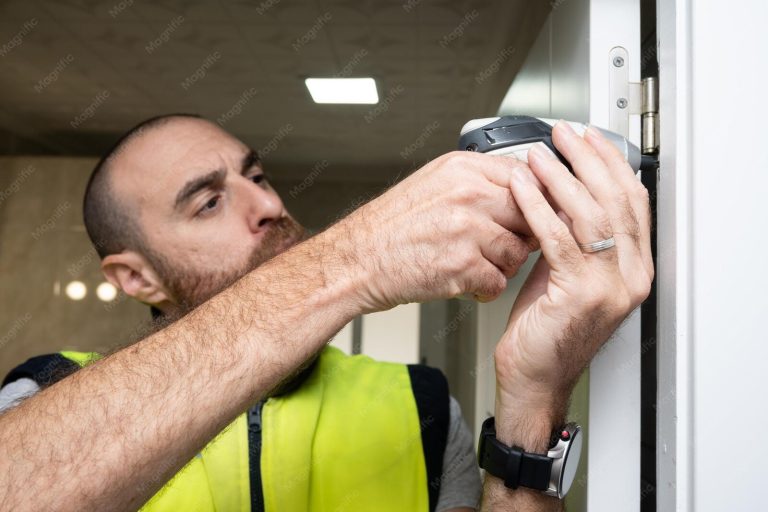
Featured image by pvproductions on Magnific (free licence).